
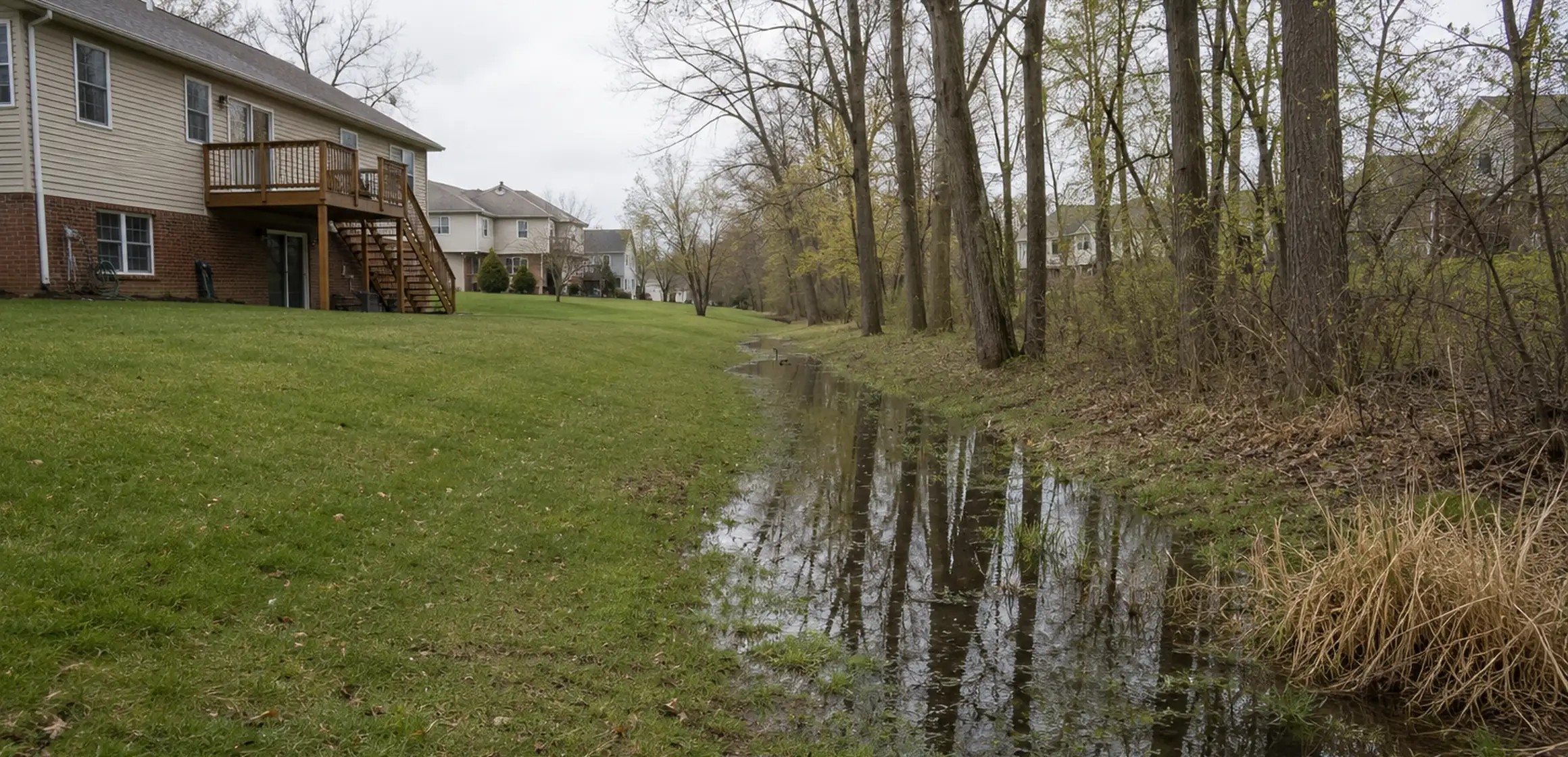
Replace the label with a documented event
A phrase such as 'flood home' can refer to very different conditions: mapped river flooding, surface water at a door or window, groundwater seepage, sewer backup, roof runoff, or a failed sump system. Identify what happened, where water entered, and what evidence supports the account.
A past event alone cannot predict recurrence, and a completed repair proves only the work documented. Preserve the records and direct condition, drainage, structural, and environmental questions to the appropriate inspectors or contractors.
Keep the reported event, inspection findings, written quotes, and estimated ownership costs in one record for the property.
Keep flood-zone status separate from water history
Use FEMA's Flood Map Service Center to locate the structure on the current effective FIRM, note the panel and zone, and search for applicable Letters of Map Change. This process applies whether the property is near the Huron River, another mapped water feature, or no obvious waterway. Follow the complete flood-zone address check.
FEMA maps show modeled flood risk, not a house's water history. Basement water can also result from drainage, groundwater, sewer, or equipment problems unrelated to the mapped zone.
If the panel returns Zone X, read what shaded and unshaded Zone X mean before describing it as simply safe or unsafe.
Build a record of the cause and response
Review the seller's completed disclosure, then request available supporting records through the transaction. These may include dates and locations of water entry, photographs, repair invoices, warranties, permits, drainage plans, sump or backwater-valve records, and insurance or claim documents the seller is able to provide.
Ask whether walls, flooring, insulation, electrical components, or mechanical equipment were affected and how materials were dried or replaced. An inspector can assess visible present conditions, but access limits and concealed assemblies should be stated clearly in the report.
A permit record confirms the filing or inspection recorded by the issuing office. An invoice describes the work paid for and carries only its written warranty. Treat each document according to the facts it records.
Inspect the water pathways
Examine roof drainage, downspout discharge, lot grading, foundation openings, window wells, basement or crawl-space surfaces, sump components, floor drains, and any visible drainage improvements. Consider the elevation of doors, garage entries, and mechanical equipment relative to nearby ground.
MapWashtenaw and local records add context about the parcel, drains, and nearby water features. Use them alongside an on-site drainage or engineering assessment when technical concerns remain.
Confirm financing and coverage with the decision-makers
Ask the lender whether flood insurance is required for the specific building and loan. Ask a licensed insurance professional for written flood and water-related coverage options, including premium, deductible, limits, exclusions, waiting periods, effective dates, and any documentation needed for the quote.
Standard property insurance and flood insurance are distinct products, and policy wording and available endorsements vary. Confirm how the proposed policy treats each relevant source of water.
Build the record before negotiating
Gather the flood map, parcel record, seller documents, repair history, and available permits before the inspection deadline. Give the relevant records to the inspector, contractor, lender, insurer, or local office responsible for the remaining question.