
Review the system record and current evaluation
Homes outside municipal sewer service may treat wastewater on site. A listing's "septic" field does not describe the system's design, maintenance history, capacity, or present condition, and those details are not reliably visible from a showing.
Search the County's well and septic records, confirm the Time of Sale requirements, and read the certified inspection report for the property. Records and an inspection answer different questions: a permit may show what was approved, while the current evaluation addresses what the inspector could observe and test at the time.
How a septic system works
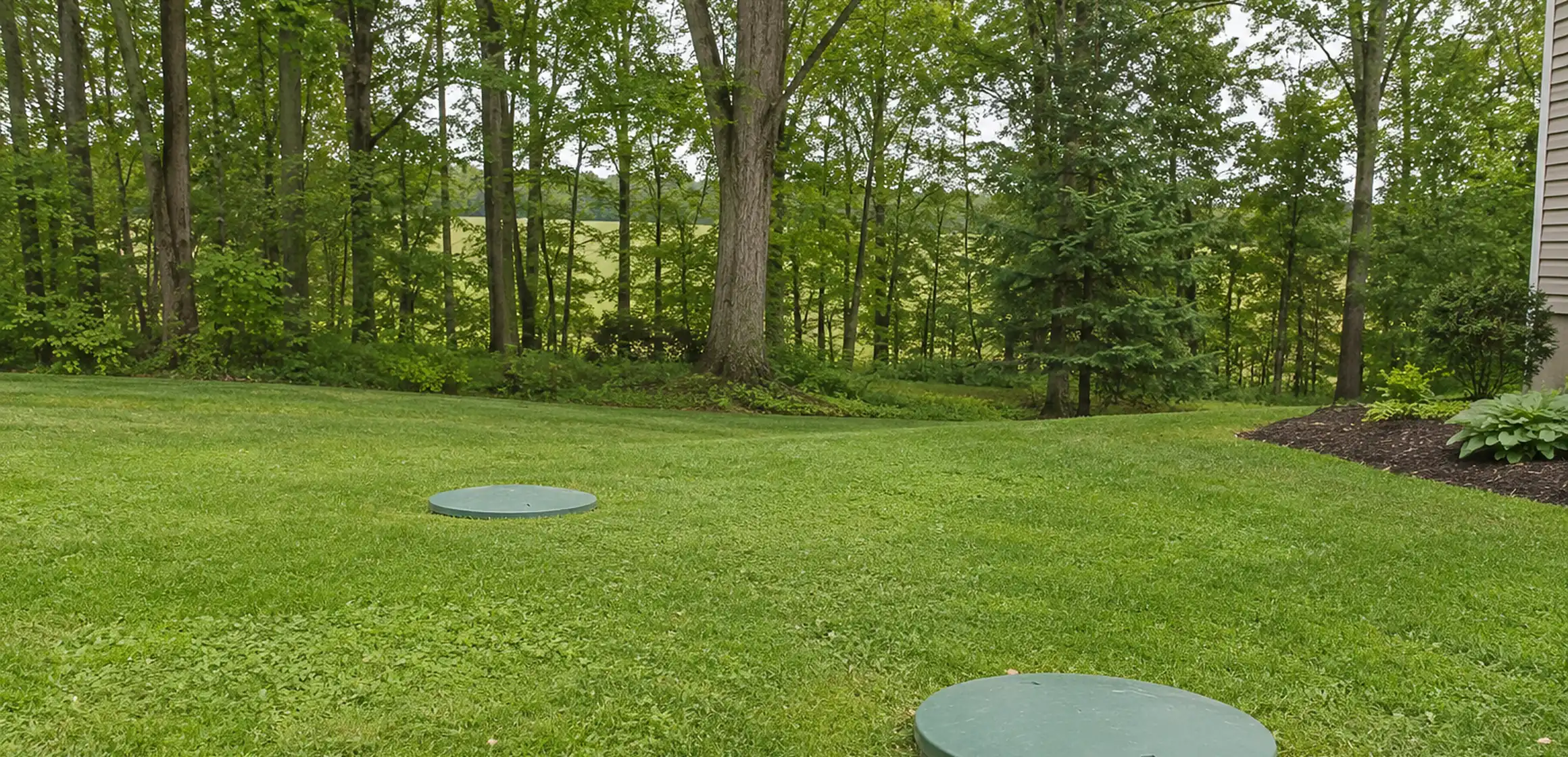
A conventional system generally includes a buried tank and a soil-based drain field, also called a leach field. Solids settle in the tank and liquid effluent moves to the dispersal area for further treatment in the soil. Materials and layouts vary, so use the permit and evaluation record to identify the installed design.
EPA guidance says household tanks are commonly pumped every three to five years, but the right interval depends on tank size, household size, wastewater volume, and solids. Allowing solids to build up can send them toward the drain field and contribute to clogging or failure. A qualified inspector or contractor should diagnose the condition and available remedy.
Some systems include pumps, controls, or other treatment components. EPA recommends more frequent inspection for alternative systems with mechanical parts; use the permit record and service documentation to identify the installed system.
County requirements depend on the site
Septic suitability is site-specific. Soil profile, slope, seasonal groundwater, setbacks, available area, and the proposed system design all matter. Washtenaw County requires a soil evaluation for a new or replacement system, so broad assumptions about a township or acreage are not a substitute for the record for that parcel.
Washtenaw County Environmental Health administers local permitting, soil evaluations, and a Time of Sale program for residential properties served by an onsite well or septic system. The regulation includes exceptions, so verify the current requirements for the specific transfer rather than relying on a general summary.
If the property is on acreage, the septic question is usually tied to the soil evaluation for a proposed or replacement system, and sometimes to regulated wetland that limits where a field can physically go.
Inspection questions
County records can be reviewed before an offer. A current inspection is still needed to assess the system serving the property.
- Ask for pumping, maintenance, repair, and inspection records, noting any gaps without assuming what caused them.
- Search the available permit and evaluation records through Washtenaw County Environmental Health; older or incomplete files may not show every detail.
- Confirm how the County's Time of Sale regulation and any listed exception apply to the transfer, and obtain the County authorization required for the transaction.
- Treat odors, slow drains, backups, or soft, wet, or unusually lush ground over the field as reasons to consult a qualified inspector. They are not a diagnosis.
- Review the certified Time of Sale report and discuss whether an additional buyer inspection is appropriate under the purchase agreement.
If the house also uses a private well, request the well record and applicable water-test results. The site plan and County isolation-distance requirements help show how the well and septic components fit on the parcel.
System components
These guides explain the principal parts of a septic system.
Inspections and reports
Review the inspection scope, cost, and limits before relying on the result.
Repair and replacement costs
Review system-specific service, repair, and replacement questions before assigning a budget.
Repairs and replacements
The scope varies with the failed component and the site. A lid, baffle, tank, pump, control, pipe, or drain-field issue can call for a different remedy. Obtain a written assessment from a certified septic inspector or contractor. Confirm County permitting requirements before assigning a cost or schedule.
A replacement can require a County application, soil evaluation, design, permits, installation, and inspection. Site conditions and agency or contractor availability can affect timing, so transaction deadlines should use current guidance for the property rather than a generic estimate.
If a conventional design is not approvable, the County may require a different design or find that the proposed use cannot be supported as planned. Soil, slope, groundwater, setbacks, and available area therefore belong in the feasibility review, not in a rough online cost range.
Evaluate the records, certified report, maintenance needs, and contract protections before deciding whether the system is acceptable.
Private wells
A property with onsite wastewater may also use a private well. Washtenaw County publishes minimum isolation distances between wells, septic components, buildings, and other features. On a constrained lot, review the approved site plan before assuming space exists for a replacement field or another improvement.
Ask for the available well record and any water-test results applicable to the transfer. Washtenaw County Environmental Health provides well and septic records and administers the Time of Sale program; read both parts of the report when both systems serve the property.