
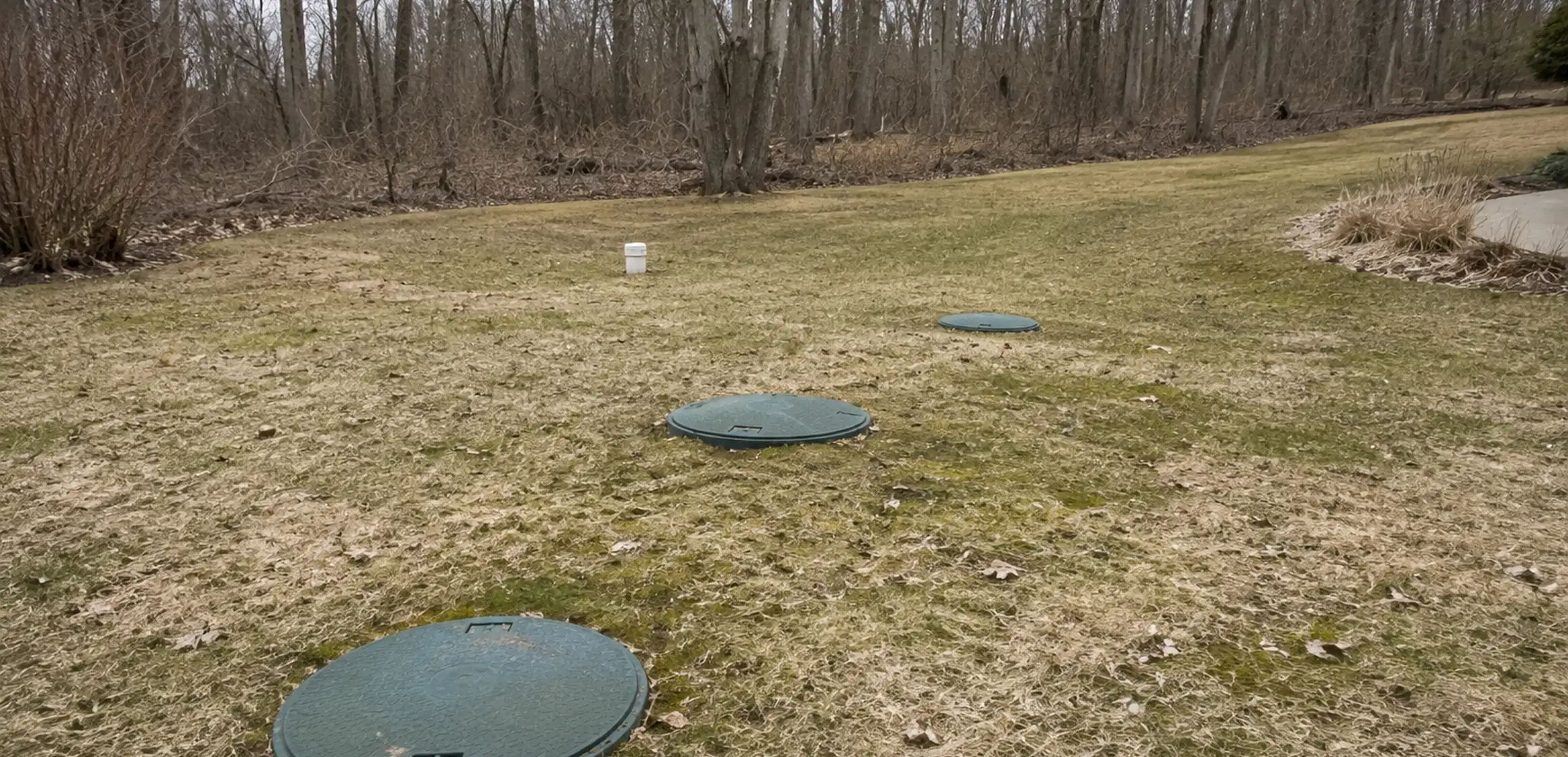
Why septic installation history matters when you buy
A listing may call a system 'newer' without identifying which components were installed, the permit involved, or whether the authority recorded completion. Buyers should verify the work instead of treating age as proof of condition or approval.
Installation history can affect the purchase timeline, future maintenance, proposed additions, and the scope of any later repair. Request the government file and contractor documents early enough to review missing or inconsistent information.
Compare the installed system with the approved plan and recorded inspections. An invoice or warranty adds supporting detail to the record held by the authority with jurisdiction.
How a septic system is installed
Washtenaw County requires a soil evaluation before building a home that is not served by municipal or centralized sewage treatment. That process informs the site and system review and may include more than a simple percolation-rate test.
A conventional system uses a septic tank followed by a drain field, also called a soil absorption field. The tank separates solids from liquid effluent, which moves to the field for further treatment and dispersal in soil. Washtenaw County's published process considers proposed sewage flow and the parcel's soil evaluation; ask the authority to explain the sizing and design recorded for the address.
The applicable authority determines the required inspections and completion documentation. Ask it to confirm the status shown in its records; an invoice, working fixture, or missing document answers a different question.
What makes installation different in Washtenaw County
EGLE's Onsite Wastewater Management Unit supports and oversees local health-department programs under Michigan's Public Health Code. Washtenaw County Environmental Health publishes local information about sewage permits, site plans, soil evaluations, system sizing, minimum isolation distances, and certified contractors.
Confirm the authority for the parcel instead of inferring it from the postal city or neighborhood. Ask that authority which current standards, reviews, and permits apply to the proposed work.
Wells, structures, property boundaries, water features, easements, utilities, access, and soil conditions can affect the available system location and design. For a particular parcel, the soil evaluation and approved site plan determine where the system may be installed.
How to verify permits, soils, and installer credentials
Ask the seller for the permit, approved site or as-built plan, inspection and completion records, contractor information, invoices, operating instructions, and warranty. Cross-check the documents with the authority that serves the exact parcel and obtain a current inspection from a qualified septic professional.
When a seller document is missing, ask the authority what its file shows and what further review is available. If records or installed conditions differ, discuss the transaction implications with the appropriate inspector, contractor, lender, title professional, or attorney.
What a new septic system costs to install and inspect
There is no reliable universal installation price. Our septic system cost guide lists the design, permit, access, equipment, abandonment, excavation, and restoration items that written quotes should address.
Inspection is a separate scope; the septic inspection cost guide explains how to compare current quotes for the proposed work. Check whether the price includes the installer, pumper, inspector, designer, electrician, and excavator.
Responsibility for work before closing is a contract question. Put the approved scope, contractor, permits, payment, access, warranty, inspection, documentation, completion standard, and timing in writing and obtain legal advice where needed.
When installation turns into a repair
A localized component defect and a drain-field or system-design problem can call for different scopes. What septic system repair involves before replacement explains how to request a diagnosis without assuming the outcome.
The septic inspector and permit authority should determine whether repair, alteration, or replacement is appropriate. Ask them to connect the recommendation to documented observations and the approved design.
Assemble the installation file
Request the permit, approved plan, inspection record, completion status, contractor documents, and warranty before the contract deadline. Compare those records with the current inspection and any written quote for unfinished or corrective work.