
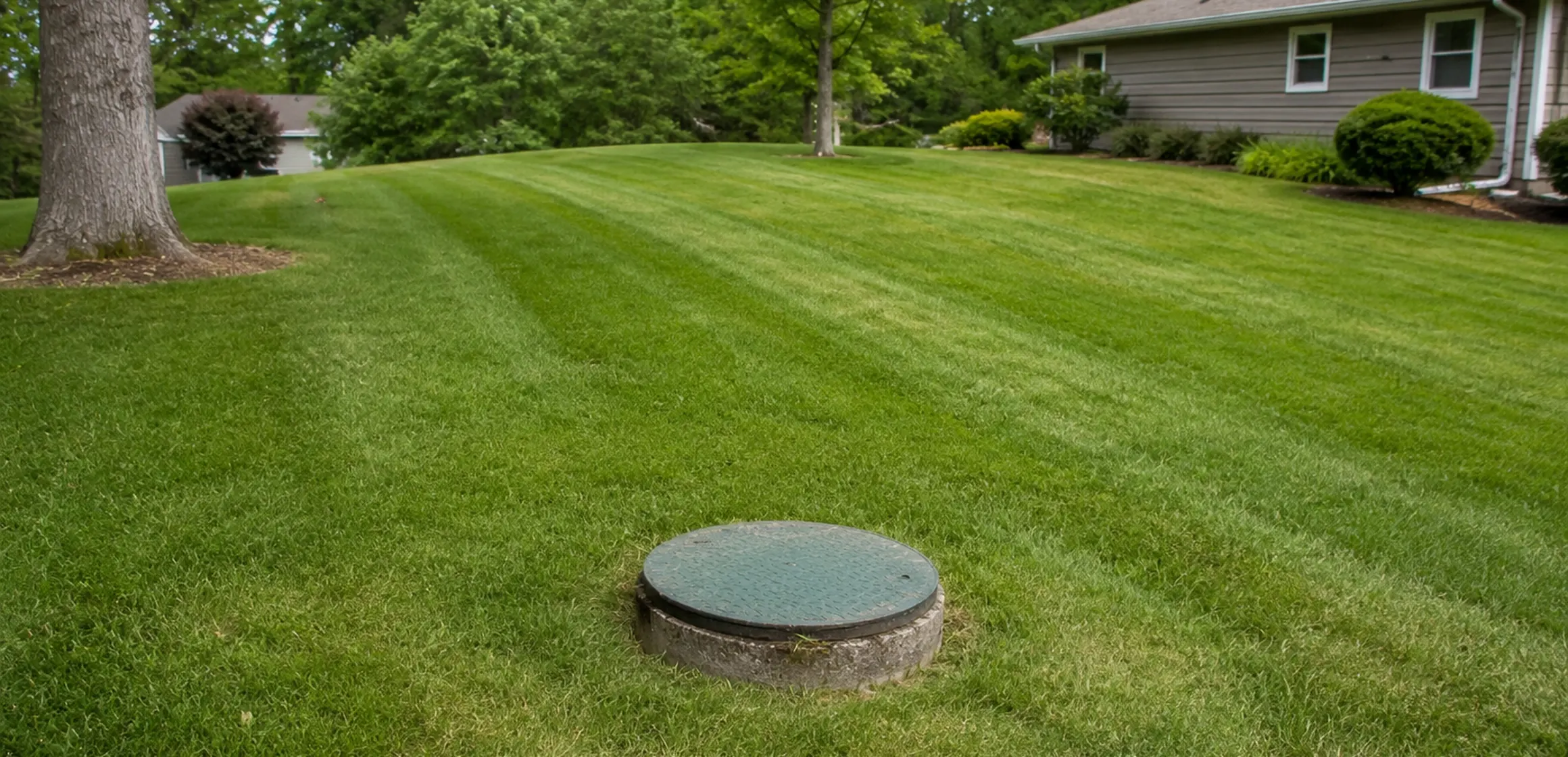
When a septic system moves from maintenance to repair
Slow drains, odors, wet areas, alarms, backups, or abnormal liquid levels justify diagnosis because plumbing, tank, piping, pump, control, distribution, surface-water, and drain-field issues can overlap.
Before negotiating work or a credit, obtain a written diagnosis and quote for the property. A purchase agreement should state responsibility, access, permits, completion evidence, payment, and what happens if the scope changes.
What septic system repair covers
A conventional system can include a tank, baffles, inlet and outlet piping, distribution components, and a soil absorption field. Alternative designs may add pumps, controls, alarms, or treatment units. A proposed repair should name the actual component and explain how the work addresses the observed defect.
A lid, baffle, pipe, pump, or tank repair may leave a separate drain-field concern unresolved. A wet area calls for diagnosis; the septic inspector should describe the evidence and any further evaluation needed.
Ask whether the proposal is maintenance, a component repair, an alteration, or replacement under the authority's terminology, because permit and documentation requirements may differ.
Why Washtenaw County repair rules matter
Local health departments have primary regulatory authority over onsite septic systems under Michigan's Public Health Code, with EGLE providing program oversight and technical resources. Washtenaw County publishes its sewage-permit, installation, repair, and certified-contractor process.
Confirm the authority for the exact parcel and ask what it requires before work begins. Postal city, township name, or an out-of-area contractor's usual process is not a reliable substitute.
Unresolved permit or completion questions can affect a transaction, but their legal, title, lending, or insurance consequences depend on the documents and parties. Ask the appropriate advisor to address each issue before the contract deadline.
How to verify whether repair is realistic
Ask the seller for available permits, approved plans, completion records, pumping and service history, prior inspections, repair invoices, and operating instructions. A plan may describe the approved layout but not prove that every component is in the shown location today.
Have a qualified septic professional evaluate the relevant components and document findings, methods, and limitations. Ask Washtenaw County Environmental Health what its records show and what current review is required for the proposed repair.
If the seller cannot produce a document, request the government file and review the gap before drawing conclusions about the work.
What septic repair costs compared to replacement
Repair price depends on the diagnosed component, access, parts, labor, pumping or excavation, permits, testing, and restoration. The septic inspection cost guide explains how to keep diagnosis and repair scopes separate.
If the professional or authority recommends broader work, use the septic system cost guide to compare quote inclusions. Obtain current written estimates based on the same scope.
The signed agreement determines which party will cover septic work. With appropriate legal guidance, document the scope, payment, warranty, inspections, completion evidence, and response if the work changes before closing.
When repair turns into new installation
A component repair may expand when the field evaluation, current use, site constraints, or approved design calls for broader work. The septic system installation guide covers the permit, soil-evaluation, contractor, and completion questions for that situation.
The reviewing authority determines whether a proposed repair can be approved, while the septic inspector or contractor addresses the technical scope. Avoid claims about remaining life until that review is complete.
Document the repair scope
Request the available records, arrange inspection access, and gather written quotes within the contract timeline. A repair agreement should identify the diagnosed problem, approved scope, permits, contractor, payment, completion evidence, warranty, and deadline.