
Septic or sewer service changes the ownership math
Some listings in Washtenaw County say 'septic' and others say 'sewer,' but the difference is not just a word in the listing. Whether a home connects to a municipal sewer line or treats its own waste on-site changes what you will maintain, what you will pay, and what you should verify before closing.
When comparing a sewer-served home with a septic property, use current utility bills, system records, inspection findings, maintenance requirements, and written quotes for each home. Compare the verified responsibilities and costs instead of assuming either system is inherently better.
Why the difference matters at closing
With public or community sewer service, wastewater leaves through a service line and enters a larger collection and treatment system. The owner may still be responsible for some private piping, connection work, charges, or assessments. Confirm the boundary of responsibility with the utility and title or legal professionals.
An onsite septic system generally places the tank, distribution components, drain field, and any pumps or controls on or serving the property. Ownership and maintenance duties can be affected by easements, shared systems, association documents, or agreements, so do not assume every component is solely owned from the word 'septic.'
Budget sewer charges and private-line work separately from septic inspection, pumping, service, repair, or replacement. Use current bills, authority records, and written quotes to compare the two.
How sewer and septic systems work
A municipal or community sewer system collects wastewater through service lines and mains and sends it to a treatment facility. The utility can explain the service area, billing, and public-private maintenance boundary for a particular connection.
A conventional septic system has a buried tank that separates solids from liquid effluent and a drain field that provides further treatment and dispersal in soil. The approved design and soil evaluation for the parcel describe the intended treatment area and site conditions.
Some properties use pumps, pressure distribution, raised systems, advanced treatment, or shared components. Identify the actual system from approved documents and inspection; do not infer the design from the property's location or appearance.
What is specific to Washtenaw County
A mailing address may not match the municipality that provides utilities. Confirm sewer service with the local authority, even when a sewer main is nearby.
Michigan's Public Health Code places primary onsite-wastewater authority with local health departments, while EGLE provides program oversight and technical resources. Washtenaw County Environmental Health publishes local information about soil evaluations, sewage permits, certified contractors, installation, and repair.
An existing system may have been approved under requirements different from those applied to proposed work today. Only the authority can explain whether a repair, replacement, addition, or change of use calls for a new review.
Use the parcel's utility account, permit record, approved site documents, title information, and inspection findings. Countywide geology or neighborhood assumptions cannot answer which system serves the home.
How to verify what service a property has
Start with the listing and seller's disclosure, then ask the utility or municipality whether the parcel has an active connection and account. Also ask about private service-line responsibility, outstanding connection charges or assessments, and any known planned work that can be disclosed.
For septic properties, ask for the septic permit file, any inspection report, and the last pumping receipt. The Washtenaw County Environmental Health Division may have records of the original installation and subsequent repairs; you can request them by parcel or address.
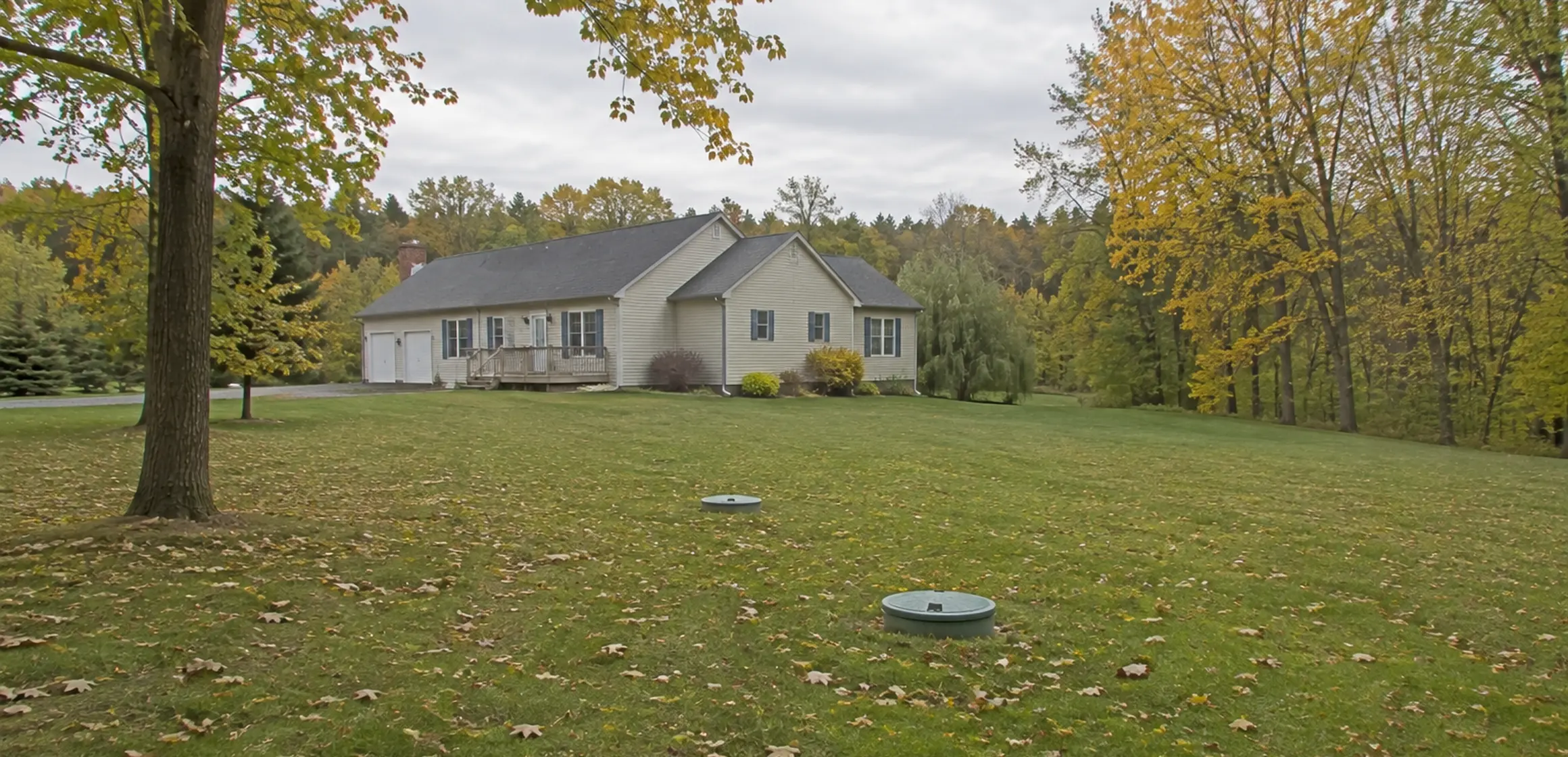
Covers, cleanouts, pipes, and yard features can suggest questions but do not prove which service the house uses or where responsibility changes. Have the utility or septic inspector identify and assess the system within the inspection contingency.
When comparing multiple homes, use the same utility and private-system checklist before making an offer.
What each system costs over time
For sewer service, review current usage and fixed charges, private service-line condition, and any disclosed connection fee or assessment. Ask the utility how billing is calculated and whether the seller's past bill is relevant to your expected use.
For septic service, review maintenance requirements and obtain an address-specific inspection quote. The septic inspection cost guide explains how to compare scope.
If defects are identified, obtain current written repair or replacement quotes based on the approved design and site. The septic system cost guide and tank cost guide list quote variables without promising a universal price.
Confirm service before comparing costs
Identify the utility or permit authority and gather current bills, inspection findings, and quotes. Confirm the service connection with the utility and any private-system condition with the septic inspector before comparing ownership costs.