
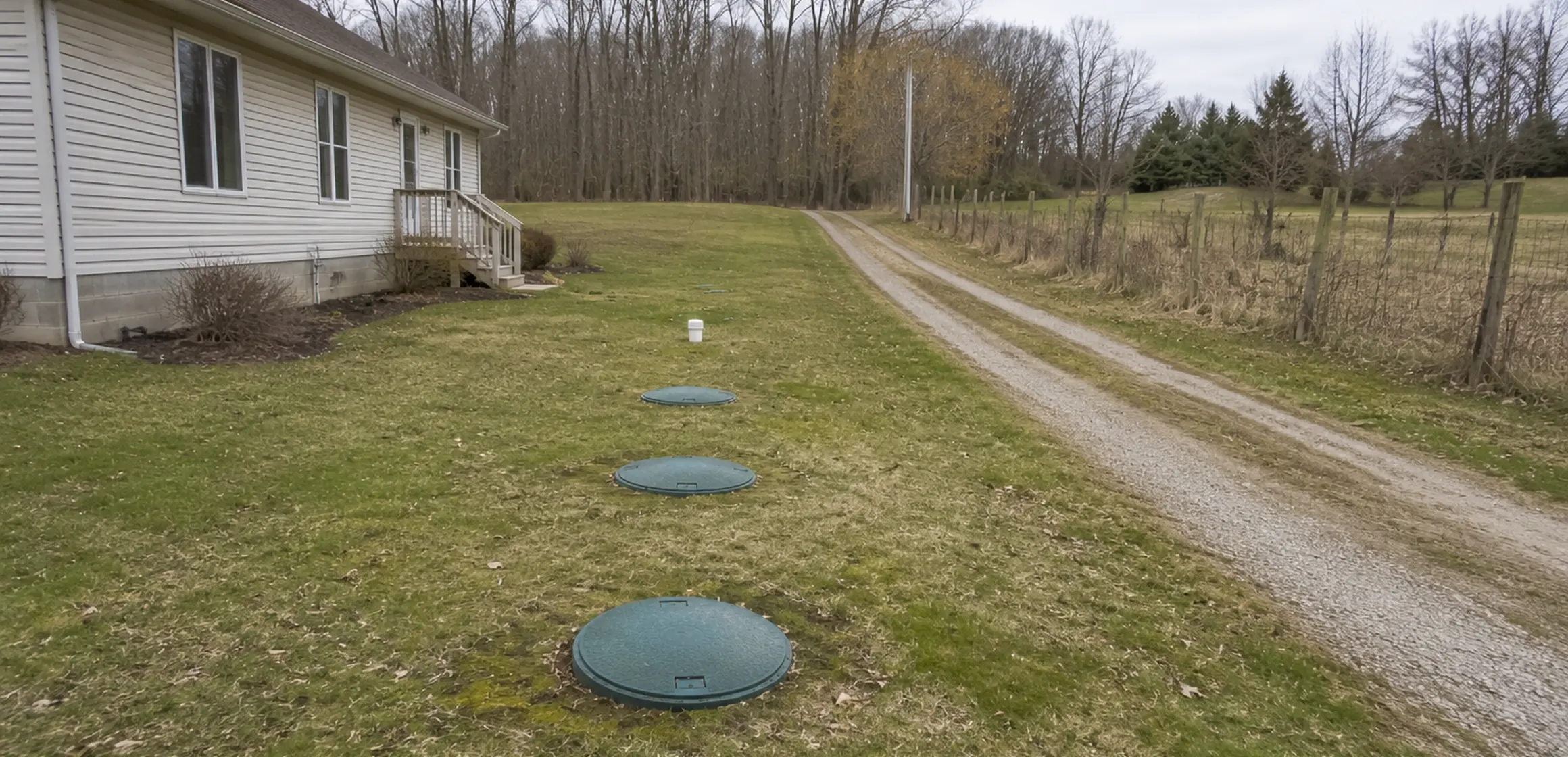
Review a new system's permit and installation record
When a listing calls a septic system 'new,' use the permit and completion records to identify the components replaced, the approved plan, and the inspections completed.
Separate the age of the tank from the condition of the drain field, distribution components, pumps, controls, and piping. Missing records identify questions to resolve with the authority, seller, inspector, and title or legal professionals before closing.
How a septic system is designed and installed
Wastewater enters the tank, where solids settle and fats, oils, and grease rise. Liquid effluent then moves to the drain field, where unsaturated soil provides further treatment and dispersal. Set the maintenance frequency from the system type, tank size, occupancy, water use, solids accumulation, mechanical components, the inspector's findings, and EPA guidance.
The authority's site evaluation and sizing rules determine the approved design. Confirm the design assumptions, rated capacity, location, reserve or replacement area if shown, and any operating or maintenance requirements in the actual file.
Washtenaw County approval and inspection records
EGLE's Onsite Wastewater Management Unit supports and oversees local health-department programs under Michigan's Public Health Code. Washtenaw County Environmental Health publishes the local process for sewage permits, soil evaluations, sizing, site plans, minimum isolation distances, and certified contractors.
Use the soil evaluation, approved site plan, recorded system documents, and field inspection to assess suitability for the parcel. A neighborhood description or the appearance of an open yard supplies insufficient evidence.
How to check the permit and inspection record before closing
Start with the seller's disclosure, contractor documents, and available government records. Match the address, parcel, permit number, approved design, inspection entries, and completion status. An invoice describes the work billed, while the authority's record establishes approval.
Ask for inspection, pumping, alarm, service, and repair records that apply to the installed system. Track the same questions for each address and note which answers still need independent confirmation.
Separate system defects from other drainage problems
Slow drains, wet areas, odors, alarms, or backups can have more than one cause, including defects in the distribution system, pump, controls, piping, or drain field. Review what septic system repair involves and ask a qualified septic professional to define the inspection method, findings, limitations, and recommended follow-up.
What a new septic system costs and how to budget
Installed cost depends on the approved design and actual work. Ask whether the quote includes the soil evaluation, application and inspection fees, certified-contractor work, tank and distribution components, pumps or controls, abandonment of old components, excavation, utility locating, access, backfill, and restoration.
Use the septic inspection pricing guide and the full system cost guide to compare scope, then obtain current itemized quotes based on the same plan. Confirm credentials and requirements with Washtenaw County Environmental Health.
Confirm what was installed
Request the permit, approved plan, inspection record, completion status, contractor invoice, and warranty before the review deadline. Compare those documents with the installed system and direct any discrepancy to the permit authority and septic inspector.