
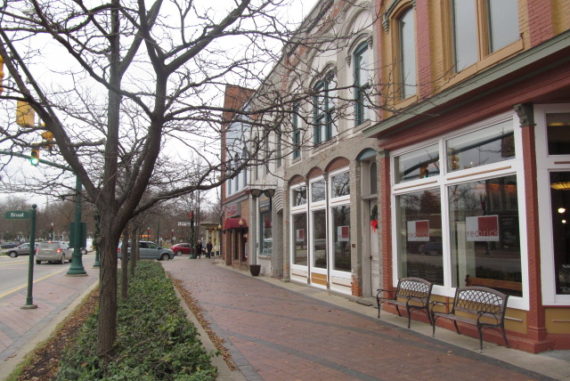
Confirm what downtown Dexter means for the address
Downtown Dexter is a search area, not a legal substitute for the parcel record. The City of Dexter is surrounded by township properties that may share a Dexter mailing address. Jurisdiction can affect taxes, utilities, permitting, services, and zoning, so confirm it in MapWashtenaw and with the responsible municipality.
A location can also feel downtown without being equally convenient to every destination. Measure the route from the front door to the places that matter, including crossings, topography, sidewalk continuity, winter conditions, and the return trip. The neighborhood guides provide the regional comparison before you review an individual property.
Parks, Mill Creek, and trail access
The City of Dexter identifies Mill Creek Park and its trail connections as part of the local parks system. The Border-to-Border Trail organization describes the Hudson Mills corridor as linking Hudson Mills Metropark through downtown Dexter and Mill Creek Park toward Dexter-Huron Metropark. Those official resources are the right place to confirm current trail segments, closures, and access.
For a property marketed around trail or park access, walk the complete route. Check where bicycles, strollers, mobility equipment, or outdoor gear would be stored at home; whether a street crossing changes the trip; and whether seasonal maintenance affects intended use. Public access nearby does not create private river access or a right to cross another parcel.
Housing types and the right inspection scope
A downtown search may include established detached houses, attached homes, condominiums, and newer infill. The legal ownership type and maintenance responsibility matter as much as style. Establish what land, exterior elements, parking, and shared systems convey before evaluating price.
For an established house, review structure, roof, exterior drainage, foundation, sewer, electrical, plumbing, heating and cooling, windows, insulation, and permit history. For a condominium or attached property, add the master deed, bylaws, budget, reserves, insurance, assessments, meeting minutes, use restrictions, and the division between owner and association repairs. Use the Diligence Checklist to assign those items to contract deadlines.
Mill Creek, drainage, and flood research
Proximity to Mill Creek should prompt research, not a conclusion about flood status. Check the current FEMA map, Washtenaw County mapping, seller disclosures, insurance availability, site grading, drainage features, and any known water history for the parcel and building. Mapped flood zones can cross lots in ways that are not obvious from a street view.
A lender's flood determination answers a financing requirement; it does not replace inspection of drainage, foundations, lower-level finishes, sump systems, utilities, and access during heavy weather. If flood-zone interpretation, elevation, or insurance cost is material, consult the appropriate public office, surveyor, insurer, and lender before the relevant contingency expires. The Penn | Ewing floodplain guide explains the roles of these checks.
Test the Ann Arbor commute and local errands
Many Dexter buyers travel regularly toward Ann Arbor, but a generalized drive-time estimate can be misleading. Test the route from the property at the intended departure and return times. If punctuality matters, repeat the trip in a second traffic pattern and identify an alternate route.
Do the same for groceries, medical appointments, school activities, transit connections, and other recurring errands. A smaller downtown can reduce some trips for a specific address, but the buyer's own destinations determine whether the location changes vehicle use or travel time.
Parking and event-day conditions
Verify whether parking is on a private driveway, in a garage, assigned by an association, provided through a separate agreement, or dependent on public space. Check vehicle fit, winter access, guest arrangements, municipal restrictions, and any shared maintenance. A nearby public lot should not be marketed as if it conveys with the home.
Visit during a normal weekday, an evening, and a scheduled downtown event if event conditions matter. Observe traffic routing, pedestrian activity, deliveries, public parking demand, and sound from inside the property. Direct observation shows whether those conditions suit the buyer's routine.
Schools, taxes, and municipal services
Dexter Community Schools is the authoritative source for attendance and enrollment questions. Confirm the exact address directly with the district; a Dexter mailing address, a nearby school, or a listing field is not sufficient. Start with the school-district lookup and retain the district's response.
Use MapWashtenaw and the relevant assessor or treasurer to check parcel and tax information. Confirm water, sewer, refuse, road, and other service arrangements with the city or township that has jurisdiction. Michigan taxable value can change following a transfer, so use the property-tax guide to build a buyer-specific estimate rather than repeating the seller's current bill.
Permits, zoning, and future plans
If the purchase depends on an addition, accessory building, business use, rental arrangement, parking change, or major renovation, take that concept to the City of Dexter or the responsible township before treating it as available. Lot coverage, setbacks, floodplain rules, historic considerations, utilities, building codes, and association restrictions may each affect the plan.
Existing use is not proof of lawful use. Request permits and final approvals for significant prior work, then ask the appropriate office about unresolved records. If a boundary, easement, shared driveway, or access right matters, review the title work and recorded instruments with a title professional or attorney. Obtain a survey when advised.
A downtown Dexter buyer checklist
- Confirm city or township jurisdiction, parcel details, utilities, zoning, taxes, and school assignment.
- Walk the actual downtown, park, and trail routes in both directions.
- Test the commute and recurring errands at realistic times.
- Verify parking, storage, access, and association rights in writing.
- Review condition, disclosures, permits, insurance, drainage, and flood information before deadlines.
- Build a total ownership budget that includes likely repairs and any association charges or assessments.
- Compare the address with both downtown properties and non-downtown Dexter alternatives that solve the same daily needs.
What sellers should prepare
Provide documentation for renovations, permits, major systems, drainage or water-management work, parking rights, utilities, and association obligations. If trail or downtown access is part of the marketing, describe the actual route to a named public destination without implying private access or promising future operations.
Property descriptions should stay with observable features and verified public resources, not claims about the kinds of people who live in an area. A home valuation can account for condition, location, parking, lot, ownership type, and verified access. Buyers and sellers can contact Penn | Ewing for an address-specific review.