
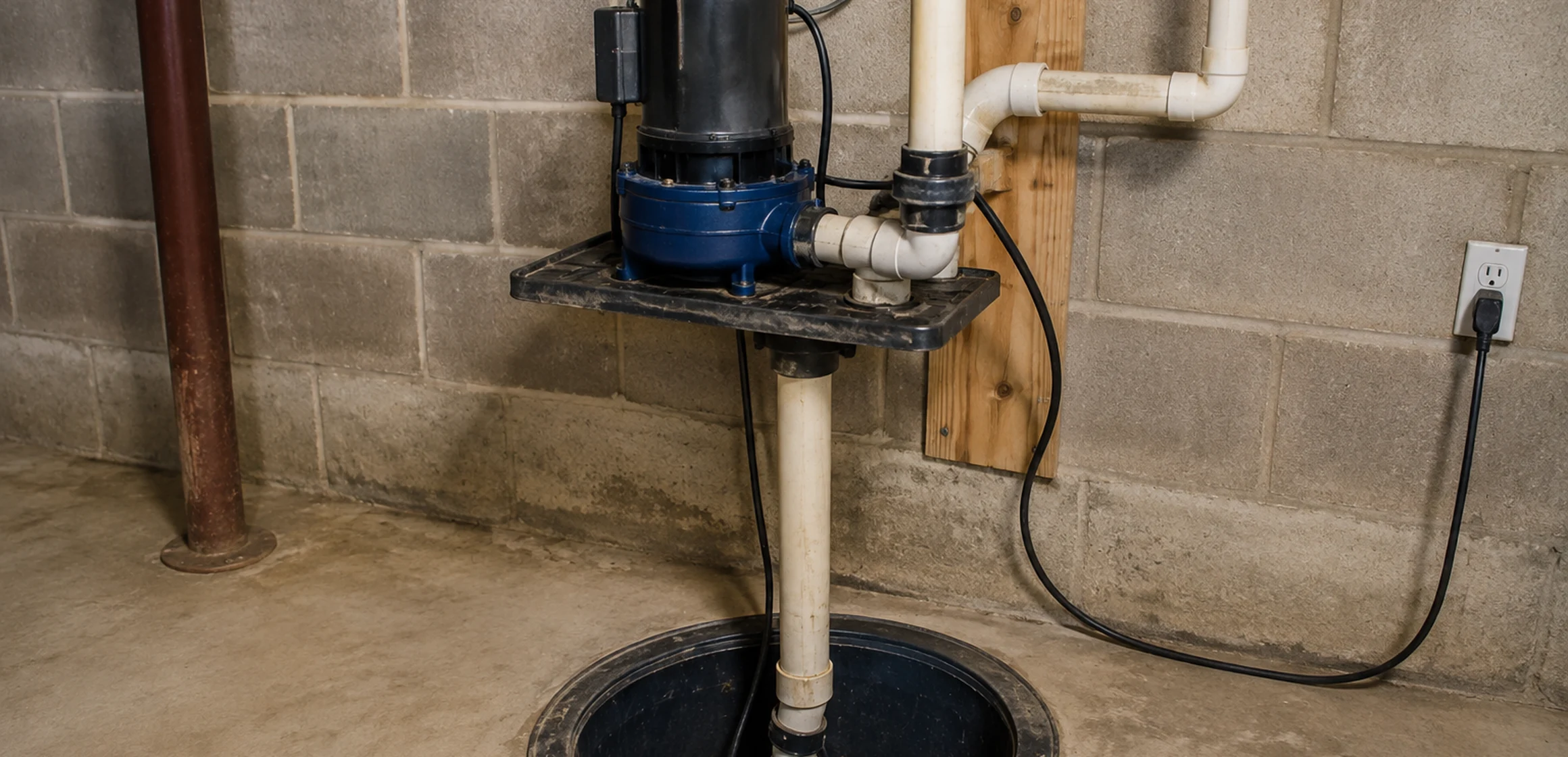
What a submersible sump pump is and why basements use one
A listing that says 'sump pump' may omit the type, capacity, age, discharge route, backup, or service history. A submersible unit sits in the basin; inspect the broader drainage system separately for suitability and operation.
Why pump type matters to a buyer
A submersible pump places the motor in the pit, while a pedestal design keeps the motor above it. Capacity, solids handling, switch design, basin dimensions, discharge head, power, service access, and manufacturer requirements vary by model, so one type should not be declared superior from the label alone.
For a finished basement or stored valuables, ask the inspector and insurer how pump failure, seepage, drain backup, and power loss are addressed. Equipment choice, backup planning, maintenance, and insurance coverage are separate decisions.
How a submersible sump pump works
A submersible sump pump places its motor in the basin. When collected water reaches the activation level, a switch or controller starts the pump and water moves through the discharge. The switch, pump, check valve if installed, and discharge route should be identified and evaluated as parts of the actual system.
Materials, motor design, switch type, and operating limits vary. Record the exact manufacturer and model and compare the installation with its instructions. Our basement water and sump-pump guide explains how the basin and drainage system fit together.
Use local evidence, not a soil generalization
The City of Ann Arbor notes that basement flooding can result from storms, snowmelt, groundwater buildup, leaks, seepage, or poor yard drainage. Use inspection and service history at the house to identify the source, inflow, and pump demand.
Review seller disclosures, visible water marks, repair records, grading, drainage, the basin, the discharge, and any relevant local reports. Records may come from the municipality, the Washtenaw County Water Resources Commissioner's Office, or another authority, depending on the location and issue. Confirm jurisdiction before relying on them. A pump test cannot recreate every future groundwater or weather condition.
How to verify a submersible pump before closing
Start with the seller's disclosure and available installation, repair, maintenance, and warranty records. Record the manufacturer, model, switch, power source, backup arrangement, and discharge route. If permits were required for related plumbing, electrical, or drainage work, ask the authority what its file shows.
Have the inspector or qualified contractor perform a controlled operational test consistent with the equipment instructions. Observe whether the switch activates, water leaves the basin, the pump stops, and water returns through the discharge; document noise, alarms, leaks, and test limitations.
Trace the visible discharge and ask where it terminates, whether it can freeze or clog, and whether it sends water away from the foundation to an approved location. Confirm the current local distance and discharge requirements.
When a submersible pump requires repair or replacement
Assess remaining life from cycling, capacity, installation, debris, maintenance, switch condition, power quality, and discharge restrictions as well as age. A motor that runs without lowering the water level needs diagnosis because the pump, intake, check valve, or discharge may be involved.
See what to check before calling for sump-pump repair. Ask a licensed plumber or qualified contractor to compare repair and replacement based on the observed defect, exact equipment, basin, and discharge system.
What a submersible sump pump replacement costs
Replacement price depends on the selected pump, switch and check valve, basin access, discharge changes, electrical work, alarm or backup, permits if applicable, cleanup, and warranty. Use the sump-pump replacement cost guide to compare itemized scope.
Obtain current written estimates and make sure each provider is pricing the same work. Confirm licenses or qualifications, insurance, parts, labor, testing, warranty, exclusions, and who handles any required permit or inspection.
Compare the pump with the drainage system
Gather the seller's disclosures, service records, inspection findings, and written quotes before the contract deadline. Have the inspector or plumber assess the pump together with the basin, power supply, controls, discharge route, and source of water.