
Evaluate the complete water-control system
Where a home has a sump pump, the pump is only one part of the water-management system. Its performance also depends on the pit, float, power supply, check valve, discharge route, grading, gutters, and foundation drainage.
Ask the seller or inspector to demonstrate the system and explain any backup power. Do not reach into a pit or operate electrical equipment without permission and safe access; testing should follow the manufacturer's instructions or the inspector's or plumber's method.
How the sump system works
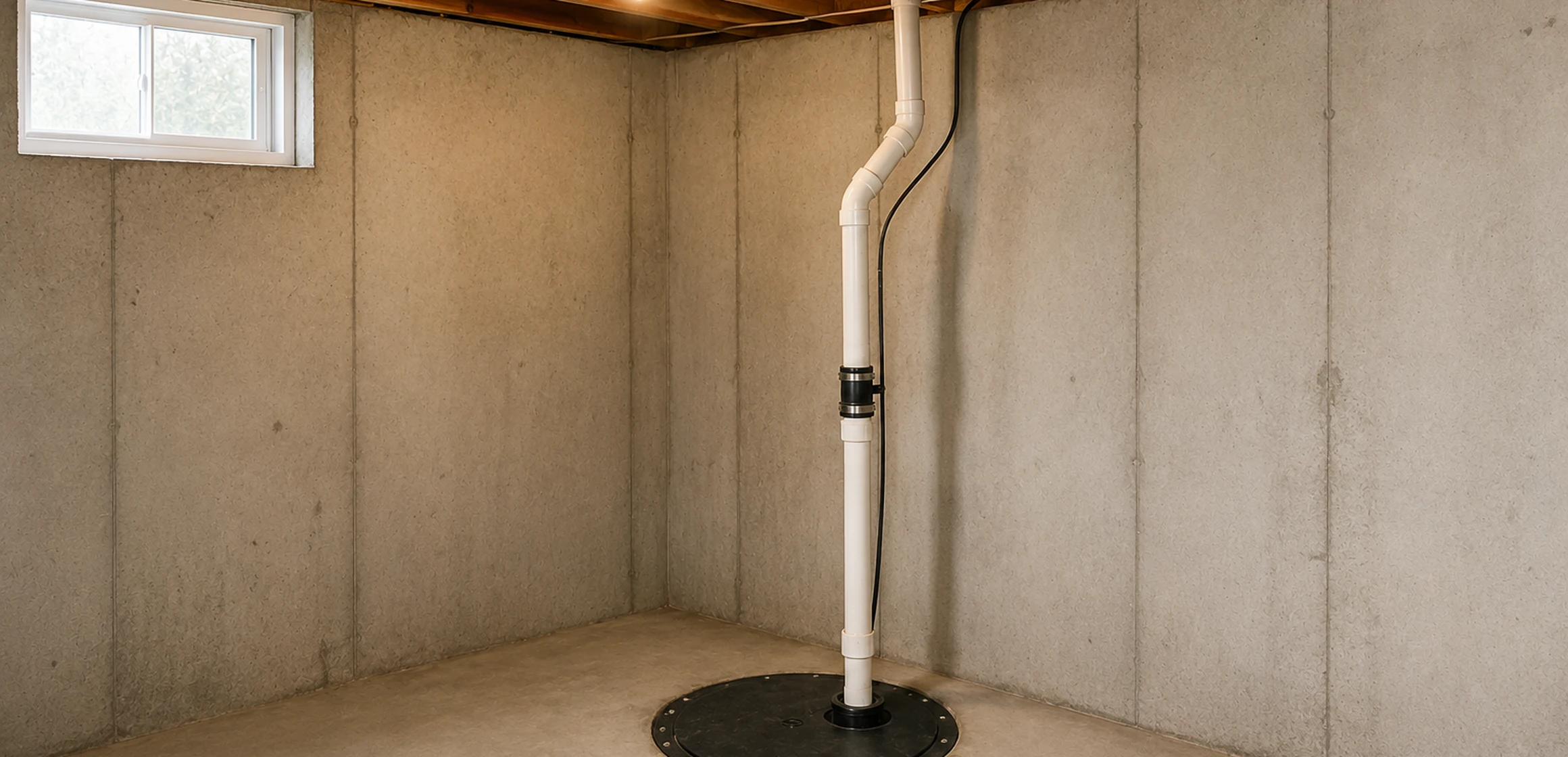
A sump pump sits in a pit at the lowest point of the basement floor. Groundwater collects around the foundation, enters a perimeter drain tile, and flows inward to that pit. When the water reaches a set level, a float switch starts the pump, which lifts the water up a discharge pipe, past a check valve that stops it draining back, and out away from the house.
Pumps commonly use either a submersible or pedestal configuration. The installed model, capacity, power source, service history, and manufacturer's instructions matter more than a general comparison. Floats, intakes, check valves, power supplies, and discharge lines are all points an inspector or service provider can evaluate.
The discharge line must carry water away from the foundation. If it terminates too close to the house or slopes incorrectly, discharged water can return toward the wall. In freezing weather, an obstructed or poorly configured outlet can stop discharge and place additional strain on the system.
Evaluate the property, not only the flood map
Basement-water risk is parcel-specific. Grade, soil, groundwater, roof drainage, foundation construction, drainage improvements, and maintenance history all matter. A mapped flood zone does not diagnose how a particular basement performs during snowmelt or heavy rain.
Water can enter through cracks, joints, openings, or drainage failures even when a structure is outside a mapped Special Flood Hazard Area. Look at the building and drainage history as well as the FEMA designation.
This differs from mapped FEMA flood risk. A property can be in Zone X and still have a history of seepage or drainage problems.
Inspection questions
Ask the seller and inspector the following questions.
- Find the pit. If there is no pit and no evidence of one, ask how the basement handles water.
- Ask for a safe demonstration of the float and pump. If it does not operate, have a plumber or electrician diagnose the pump, power supply, controls, and discharge.
- Ask about unusual noise, cycling, alarms, repairs, and the most recent service.
- Follow the discharge outside. Confirm that its location meets local requirements. Check the freeze protection against the manufacturer's instructions.
- Look at the walls and the floor-wall joint for staining, efflorescence, or fresh paint that covers one section only.
- Ask whether there is a battery or water-powered backup and how it is tested; a power outage can disable a standard electric pump while water is still entering the pit.
Read the seller's disclosure, repair invoices, insurance information the seller provides, and inspection findings together. A prior event and a documented repair still deserve follow-up about the cause, work performed, and performance since the repair.
Pump configurations and backup power
These guides explain common pump configurations and backup options.
Testing and maintenance
Use the installed model's instructions when planning testing and maintenance. Follow qualified service advice.
Service life, repair, and replacement cost
Service life and cost vary by equipment, installation, use, and site conditions. Base any estimate on the installed model and a local written quote.
Finished basements
A finished basement can make moisture history harder to evaluate. Drywall, flooring, and framing cover surfaces that might otherwise show staining, efflorescence, or a repaired crack. Ask what work preceded the finish and have visible concerns evaluated by the appropriate inspector or contractor.
Inspect the edges of the finished area. Swollen baseboards, cupped flooring, a recurring musty smell, or fresh paint confined to the lower part of one wall warrant further questions. Check whether the sump pit is still accessible after the finish work, because a pit sealed under flooring cannot be tested or serviced.
Ask the relevant city or township for available permit history. A permit record can show the scope submitted and inspections recorded, but it is not a warranty of present condition. If records are missing or unclear, direct each question to the relevant building official, inspector, insurer, or appraiser.
Preparing to sell
Before listing a home with a sump system, test and service the equipment, retain invoices, and have known defects evaluated by the relevant plumber, electrician, or drainage contractor. Review the discharge, gutters, downspouts, and grading because roof and surface water can contribute to moisture at the foundation.
Complete the applicable disclosure accurately based on what you know, and provide relevant documentation. The disclosure is not a warranty or a substitute for the buyer's inspection; questions about a seller's legal duty belong with a Michigan real estate attorney.
If permits, plans, warranties, or service records exist, organize them for the transaction. They give buyers and their inspectors a clearer factual record without promising that the system or finished space is defect-free.