
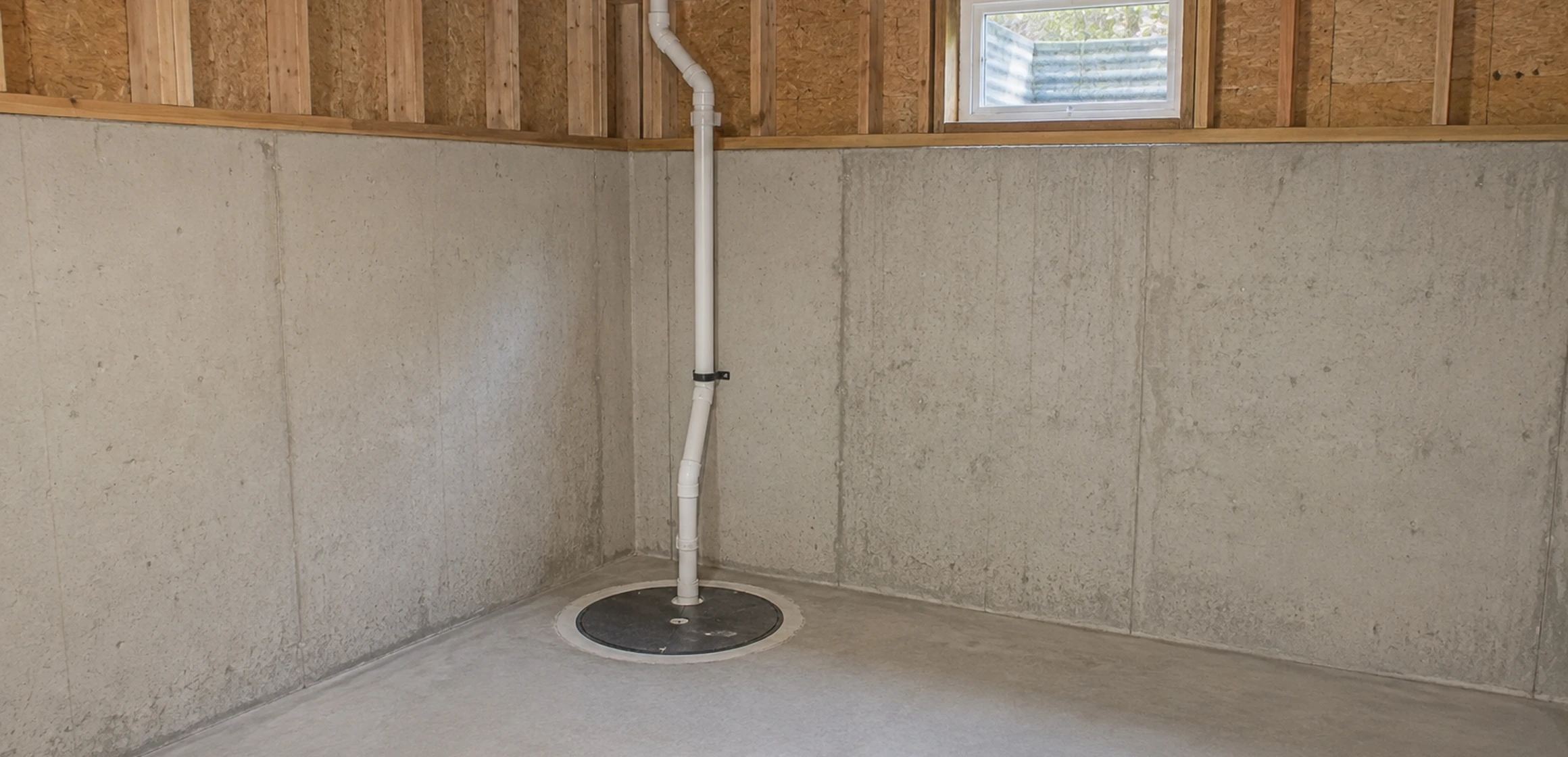
Review the complete installation
A pump visible in a basin does not establish that the full system is suitable. Buyers should review the basin, switch, check valve, power, alarm or backup, discharge route, grading, and any connected footing-drain work.
The installation should match the property's observed inflow, system layout, manufacturer instructions, and local requirements. A brief operational test shows only the conditions present during the test.
Pump, basin, power, and discharge work as one system
A sump-pump project can involve more than placing a pump in an existing basin. Collection, basin, switch, power, check valve, discharge, backup, and exterior drainage conditions can all affect how the installed system manages water.
An unsuitable pump, restricted discharge, poorly placed switch, missing or failed check valve, inadequate power arrangement, or water returning toward the foundation can undermine performance. Ask the inspector or plumber to tie any concern to an observed condition rather than predicting failure from brand or age alone.
Include any expected repair or backup cost in the property's ownership budget.
What a sump-pump installation includes
A sump pump moves water collected in a basin through a discharge. Submersible and pedestal designs place the motor differently, while switch, capacity, basin, power, check-valve, discharge, access, and maintenance requirements vary by equipment and installation. Ask the installer to connect the proposed design to observed site conditions and manufacturer instructions.
A first-time installation may involve the basin, slab or drainage collection work, pump and controls, electrical supply, check valve, discharge piping, exterior outlet, and restoration. Replacing a pump within an existing basin and route is a different scope. Confirm permit and inspection requirements with the authority. Use the basement-water and sump-pump guide to understand the system layout.
Local drainage and discharge requirements
The City of Ann Arbor says basement flooding can result from storms, snowmelt, groundwater buildup, leaks, seepage, or poor yard drainage. Determine which conditions apply at the address through disclosure, inspection, site observations, and local records rather than a countywide soil claim.
Exterior discharge can be vulnerable to freezing, blockage, damage, or recirculation. Ask the installer how the proposed route manages those risks for the site and how the owner should inspect and maintain it.
Ann Arbor documents past footing-drain connections to the sanitary sewer and publishes sump-pump and discharge guidance. Requirements and available outlets vary by property and jurisdiction, so confirm the proposed discharge with the municipality, the Washtenaw County Water Resources Commissioner's Office where applicable, or another relevant authority.
How to verify a sump pump installation
Ask the seller for available permit, installation, service, repair, and warranty records. Permit records show what the local authority reviewed, while invoices identify the equipment that was installed. A current inspection will tell you what remains in place and how it is performing.
Have the inspector or qualified contractor perform a controlled test consistent with equipment instructions. Document switch operation, pumping, shutoff, water returning through the discharge, alarms, leaks, and conditions the test could not simulate.
Trace the visible discharge and ask where it terminates, who maintains it, and whether it can freeze, clog, or return water toward the foundation. Confirm any connection or surface-discharge requirement with the appropriate authority.
Diagnose the problem before choosing a repair
A pump that runs without lowering the water level or cycles unusually can have more than one cause, including the intake, switch, check valve, discharge, pump, basin, or inflow. A licensed plumber or qualified drainage contractor should diagnose the system before a repair scope is selected.
If these signs appear during a showing or inspection, document them and obtain a professional diagnosis before deciding whether maintenance, repair, or replacement is appropriate. See what to check before calling for a sump pump repair.
What a new sump pump installation costs
Installation price depends on whether the basin and collection system already exist, the pump and control specification, discharge length and outlet, slab or exterior work, electrical work, alarm or backup, permits if applicable, testing, cleanup, and warranty.
Use the sump-pump replacement cost guide to compare quote inclusions, then obtain current written estimates for the property. Ask separately about backup capacity, maintenance, and insurance implications.
Document the installation
Gather the permit, seller documents, installation invoice, service history, inspection findings, and written quotes. Confirm the installed model, power arrangement, controls, check valve, basin, discharge route, and any remaining work before closing.