
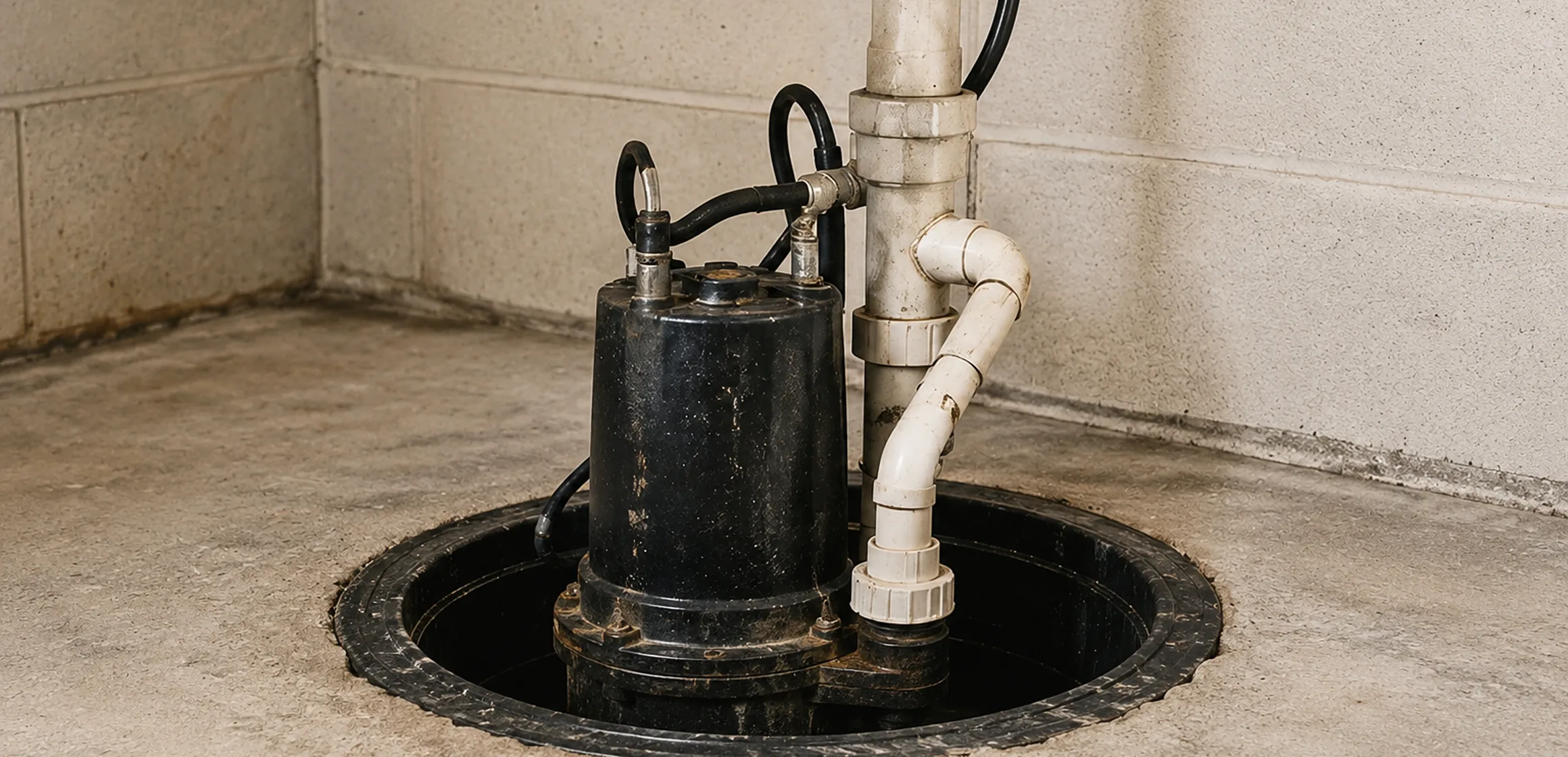
When a sump-pump problem needs attention
A sump-pump problem can expose finishes, storage, and mechanical or electrical equipment to water, but the severity and urgency depend on the inflow, basin level, drainage, occupancy, and equipment location. Treat active water near electricity as a safety issue and contact the appropriate emergency or qualified service provider.
The City of Ann Arbor distinguishes clear basement flooding from a sanitary sewage backup and provides separate reporting guidance. Identify the water source before assuming the sump pump is the cause.
For a buyer, document the observed condition and obtain a professional diagnosis within the inspection timeline before negotiating repair, replacement, or a credit.
How the pump moves water
A sump pump sits in a basin connected to the building's drainage arrangement. As water reaches the activation level, a switch starts the pump and the discharge carries water to its outlet. Our basement water and sump-pump guide explains the broader system.
Operation can depend on the pump, switch or controls, intake, basin, power, check valve if present, discharge, and incoming drainage. A symptom in one part can reflect a restriction or fault elsewhere, so the system should be diagnosed as a whole.
Use local records and property evidence
Ann Arbor's basement guidance identifies storms, snowmelt, groundwater buildup, leaks, seepage, and poor yard drainage as possible flooding causes. Determine which conditions affect the home through inspection and service history, not a countywide claim about soil.
Review seller disclosures, water marks, prior repairs, grading and drainage, pump records, discharge routing, and any relevant local reports. The Washtenaw County Water Resources Commissioner's Office or the property's municipality may be the relevant source for public-drain information, depending on location and issue. A dry visit or brief pump test cannot recreate every future condition.
How to tell if you need a repair or replacement
Have the inspector or plumber conduct a controlled test consistent with the equipment instructions. Document whether the switch activates, water leaves the basin, the pump stops, water returns through the discharge, and any alarm, noise, leak, or unsafe condition appears.
Other observations to document include continuous running, unusual noise, water returning after a cycle, or a visibly frozen or blocked exterior discharge. None identifies the failed component by itself.
A licensed plumber or qualified waterproofing or drainage contractor should identify the affected component and itemize repair and replacement options in writing. Age adds context but does not establish remaining life or the correct remedy.
When repair becomes installation or replacement
Sometimes the issue extends beyond the pump to the basin, switch placement, power, check valve, incoming drainage, or discharge route. In that situation, review the sump-pump installation guide and ask the provider to define the complete corrective scope.
A battery, water-powered, generator, alarm, or second-pump option may address some failure modes but not others. Confirm compatibility, capacity, runtime assumptions, maintenance, and any shared discharge vulnerability.
What sump-pump repair costs in Washtenaw County
Repair price depends on diagnosis, equipment, access, parts, labor, electrical or discharge work, permits if applicable, testing, cleanup, and warranty. Use the sump-pump replacement cost guide to compare quote scope.
Obtain current written estimates and make sure each provider is pricing the same work. Ask the provider to separate parts, labor, testing, warranty, exclusions, and any work assigned to another trade.
Document the problem and proposed repair
Gather the disclosure, service records, inspection findings, and written estimates before the contract deadline. Ask the contractor to identify the failed component, the cause if known, the proposed repair, work excluded from the quote, and the warranty.