
How the pump moves water
A sump pump can sit out of view until water enters the basin. Homeowners should identify the equipment, understand the discharge and backup arrangement, and follow a documented maintenance plan before a high-inflow event tests the system.
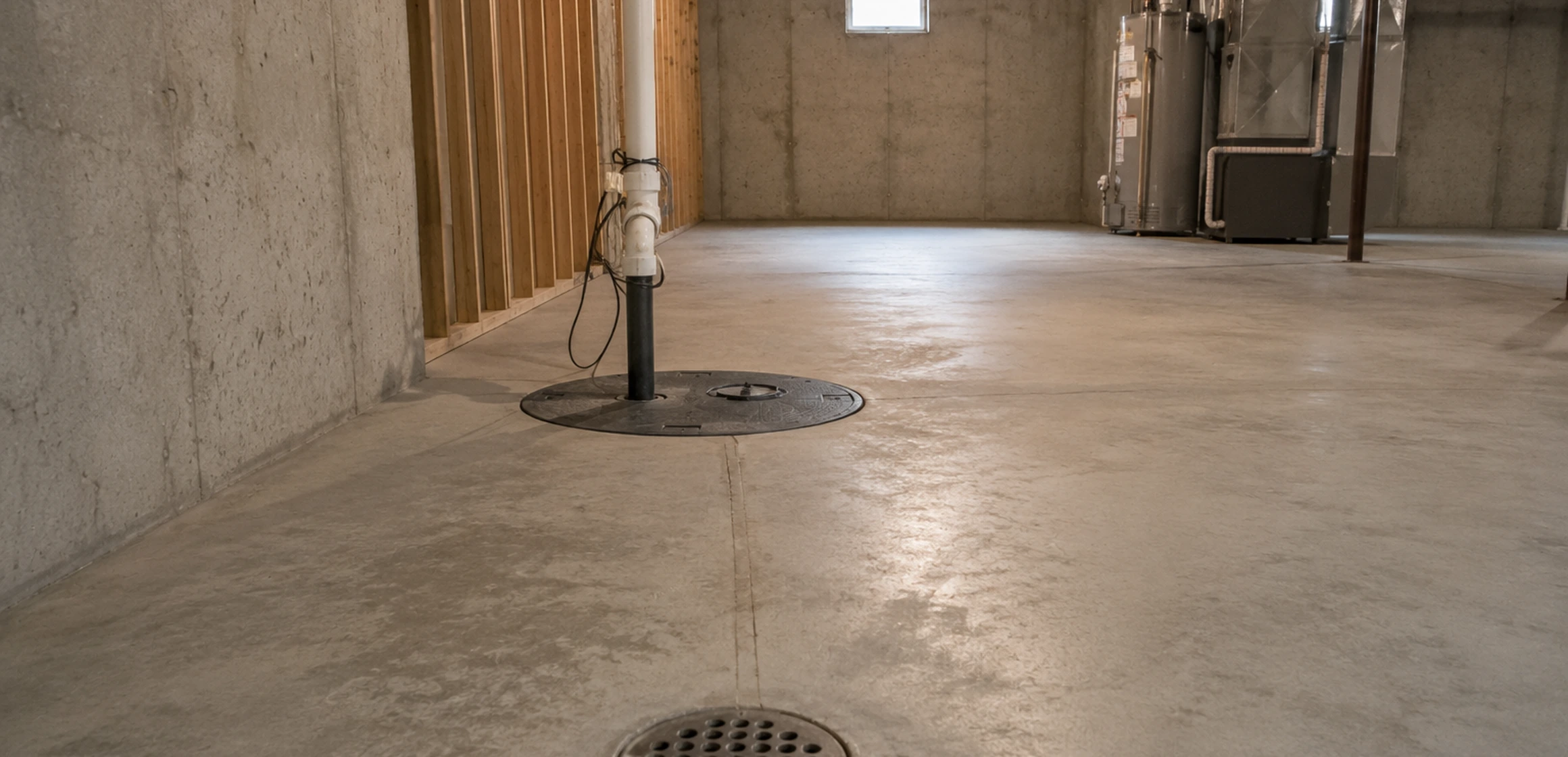
A sump pump removes water collected in a basin through a discharge. Water may enter through footing or perimeter drains or by another route shown by the building's drainage arrangement. Identify the visible basin, inlet, pump, switch, check valve if present, power, backup, and discharge rather than assuming a standard layout.
Submersible and pedestal arrangements place the motor differently, but suitability depends on the exact model, basin, inflow, switch, discharge, and manufacturer instructions. Either arrangement can be affected by a stuck switch, blocked intake, power loss, or restricted discharge.
If you are not sure how the pit and drainage system fit together, start with the basement-water and sump-pump guide.
Local basement-water and drainage records
The City of Ann Arbor notes that basement flooding can result from heavy storms, snowmelt, groundwater buildup, leaks, seepage, or poor yard drainage. Determine which conditions apply to the property from inspection and records rather than a countywide soil or water-table claim.
Review the home's grading, drainage, foundation, sump equipment, repair history, and insurance options together. Each answers a different question about basement-water risk.
For public-drain or drainage-district questions, determine whether the Washtenaw County Water Resources Commissioner's Office or the property's municipality is the relevant source before relying on a map or record.
A seasonal check you can do yourself
The City of Ann Arbor links a sump-pump maintenance checklist and identifies plumbers or handyman services as possible providers for semi-annual maintenance. Follow the equipment instructions and avoid reaching into a live basin or handling electrical equipment in wet conditions.
A controlled test can reveal an immediate operational problem, but it cannot show how the system will perform in every future event. Stop and call a plumber or electrician if the pump does not operate normally, electrical conditions appear unsafe, or the discharge cannot be observed safely.
- Test the pump only as the manufacturer or installer directs; observe whether the float rises, the pump starts, water leaves the basin, and the pump stops.
- Document clicking, grinding, vibration, or other unusual noise and have a plumber identify the cause.
- Inspect visible discharge piping for cracks, leaks, blockage, or a termination that returns water toward the house; confirm the approved outlet locally.
- Note whether the system includes a check valve and whether water visibly returns to the basin after the cycle; compare the setup with the equipment instructions.
- Keep accessible components clear only when power is safely disconnected and the manufacturer's instructions permit owner maintenance.
When maintenance turns into a repair
A pump that cycles unusually, runs without lowering the water, leaks, trips power, or fails a controlled test needs diagnosis. Possible causes include the switch, pump, intake, check valve, discharge, basin, power supply, or inflow.
An exterior discharge can be vulnerable to freezing, blockage, damage, or water returning toward the foundation. A restricted route can prevent normal pumping and affect the equipment, so inspect the visible termination and have a plumber or drainage contractor evaluate any concern.
The sump-pump repair guide lists observations to document before a service call.
What a replacement costs and when to budget for it
Do not assign remaining life from age alone. Manufacturer guidance, test results, cycling, capacity, maintenance, switch and check-valve condition, power, and discharge all matter. If reliability is material to the purchase, obtain a current written repair or replacement quote.
A battery or other backup may provide limited protection during some outages or primary-system problems, but capacity, runtime, maintenance, and shared discharge vulnerabilities vary. Review the sump-pump battery backup guide.
For quote variables and exclusions, read the sump-pump replacement cost guide.
Keep a complete sump-system record
Gather the seller's documents, service history, inspection observations, and written quotes. Record the pump and backup models, battery age, test results, discharge route, past water events, and any recommended repair or replacement.